(3-5-ETS1) Define a simple design problem that can be solved through development of an object, tool, process, or system and includes several criteria for success and constraints on material, time, and cost.
(3-5-ETS1-2) Generate and compare multiple solutions to a problem based on how well they meet the criteria and constraints of the design problem. Use evidence (observations, measurements, patterns) to construct an explanation.
(3-5-ETS1-3) Plans and conduct an investigation collaboratively to produce data to serve as the basis for evidence, using fair tests in which variables are controlled and the number of trials are considered.
STEM @ Home
Today in class we started talking about catapults and some of the math and science behind them. So what do you know about catapults?
To learn more about catapults use this link.Catapults have many uses, and your probably thinking about them as a weapon of ancient warfare. But catapults are used today in many different ways, from toys to launching air planes on limited runway space.
Lets say we want our catapults to launch Ping-Pong balls on a target. Think about what are some science concepts that will be used?
Force, is one concept that will be in use. Force is strength or energy as an attribute of movement. The stronger the force, the faster and farther it moves. So the more force applied to the catapult, the more force is applied to the object being launched. Think of a plastic spoon, the more force applied by pulling the top back, the faster and farther the object being thrown goes. A sling shot is another good example. The farther you pull back the bang, the farther and faster the projectile goes.
The challenge for this lesson is to design and build a catapult that will launch a ping-pong ball onto a target set up a few feet away.
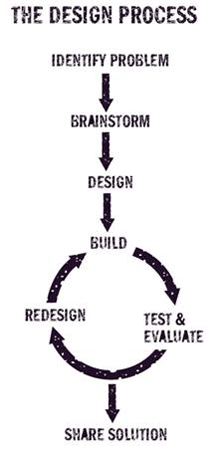
You will need to brainstorm with your adults and come up with a sketch of your design, and then build a prototype that you will text at home. And then bring to school in 2 weeks time, for launch day. On this day you will be observing your fellow students catapults, presenting your catapult to the class, as well as making predictions to who's will have the highest, and farthest launches. In the video link below there are some examples for you to review with your adults.

No comments:
Post a Comment